
Teddy Roosevelt’s Concerns About Vice in the U.S. Military
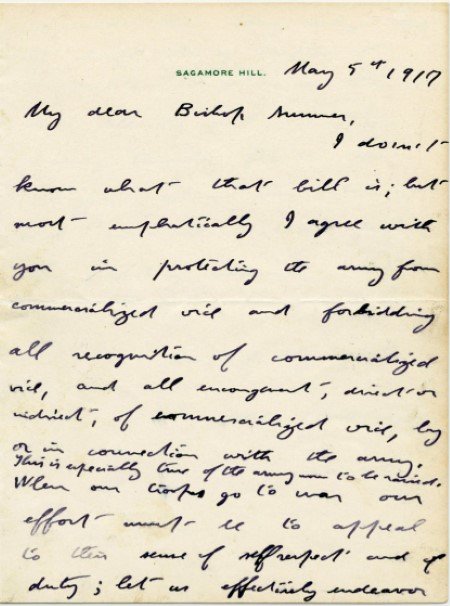
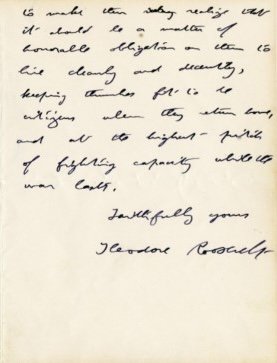
One month after the United States declared war on Germany in World War I—and less than two weeks before Congress authorized conscription and the resulting troop mobilization—former President Theodore Roosevelt wrote this letter to Episcopal Bishop Walter Taylor Sumner of Oregon. Bishop Sumner, often called the “Fighting Parson,” was known for his vigorous brand of “militant Christianity,” which led him to “go right after [evil], hammer and tongs.”
At the time, it was estimated that roughly 20% of drafted men had contracted venereal diseases before entering the armed forces. Roosevelt and Sumner were corresponding about the moral dangers that could distract young soldiers, particularly given the rapid expansion of troop numbers following the draft.
Some key items to provide context before reading the letter:
This letter reflects Roosevelt and Bishop Sumner’s shared concern about long-recognized social evils that could undermine the war effort by weakening soldiers’ readiness. Both believed that the psychological, physical, and moral condition of U.S. troops was essential to victory. In response to such concerns, the government created the Commission on Training Camp Activities (CTCA), led by Raymond B. Fosdick, which operated under both the War and Navy Departments.
The CTCA worked to suppress excessive drinking, gambling, the distribution of obscene literature, and especially prostitution. It established “vice-free” zones within a five-mile radius of military bases, provided sex education and literature on social hygiene, and promoted the message that soldiers needed to be “fit to fight.” The Commission also organized alternative, wholesome recreation for troops, such as lectures, concerts, libraries, and “clean” movie showings.
Read more about this story and the actual letter that The Luecht Historical Collection has by going to the Full Record button below.